Start with the field
Organize projects, stations, cameras, deployments, and camera checks in an integrated dashboard.
 Migrations Portal Sign In
Camera trap data, on your terms
A complete workflow for wildlife researchers, Indigenous groups and environmental researchers—from field records and image processing to collaborative review.
Photo by Ray Hennessy on Unsplash
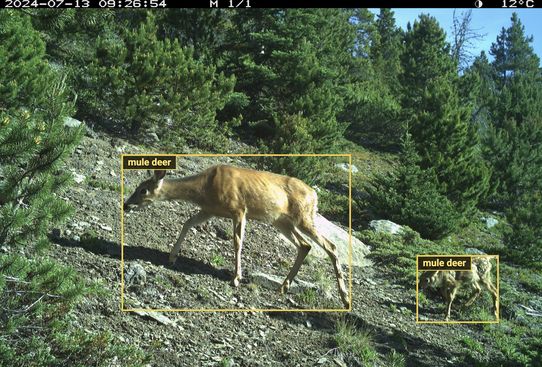
AI-assisted image tagging
Integrated AI models help you filter out blanks, people, and camera misfires, so your team can focus on the images that matter for your research.
A taxonomic classifier predicts animals down to individual species, reducing the manual work of sorting and tagging large image collections while keeping your team in charge of review.
One connected workflow
Organize projects, stations, cameras, deployments, and camera checks in an integrated dashboard.
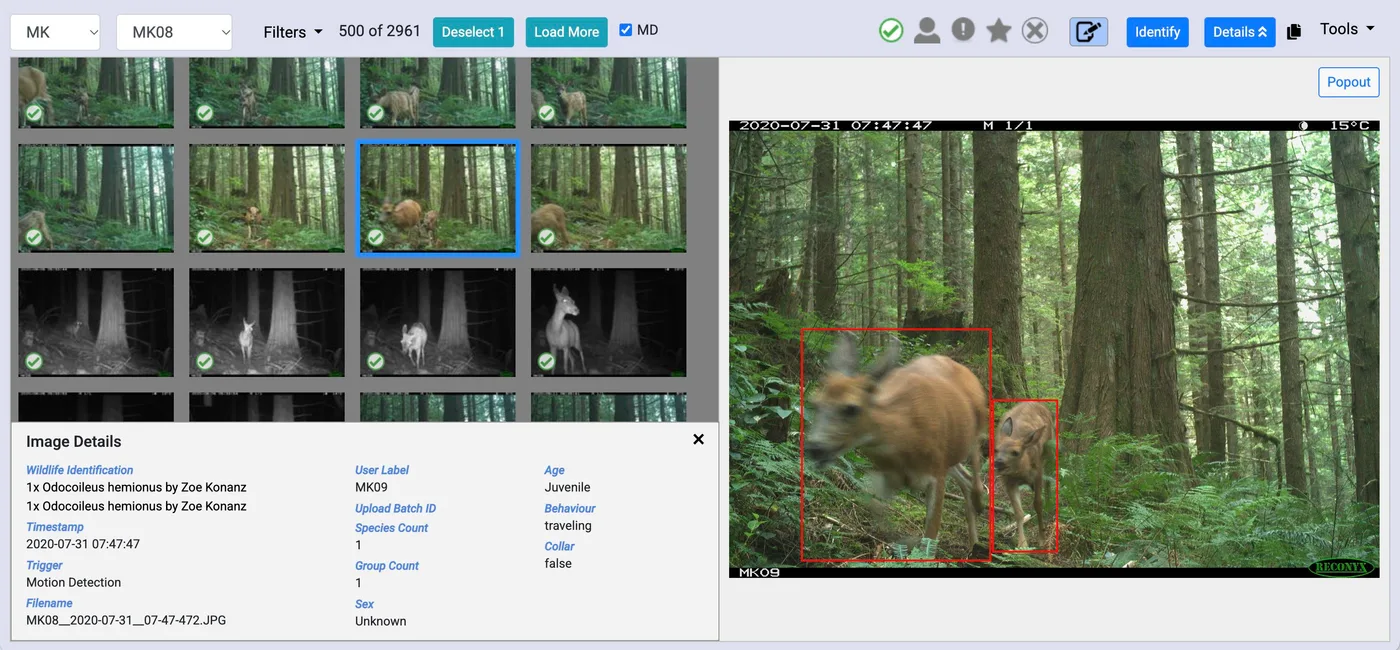
The desktop uploader standardizes files, extracts metadata, and automatically classifies wildlife by species—so your team can spend less time sorting images and more time reviewing results*.
Filter, review, tag, and export image data with the context your team needs to make decisions.
* Automated species classification requires an NVIDIA GPU or Apple Silicon.
Privacy is a feature, not a footnote
Your data stays private unless you choose to share it. Choose privacy protections, a cloud storage provider, and a hosting region—including Canada, the United States, or elsewhere—to fit your research and the communities you work with.
Designed for real research teams
Connect images to stations, cameras, deployments, and field checks.
Invite colleagues and give each person the right level of access.
Filter by processing status, detections, tags, and image metadata.
Export project data whenever you need it in a standard format.
Built around your research
Environmental research takes many forms. Migrations Portal can be customized for the images, observations, and questions that matter to your team—from wildlife surveys to monitoring ocean-surface oil slicks.
Use flexible species lists, including Indigenous names for animal species, to reflect your project’s needs and the knowledge and languages of the communities involved.
Customize image tagging schemas for your research purpose. Define the categories and observations your team needs, whether you are recording wildlife or tracking signs of oil leaks at the ocean surface.